What haircut suits my face? The prompt that gets a straight answer
Ask an AI what suits you and it will tell you that you have an oval face and that almost anything works. That is flattery, not a read. Forcing it into a fixed format and forbidding the compliment gets you something usable.
6 MIN READ·UPDATED August 2026
Ask any AI what haircut suits you and it will tell you that you have an oval face and that most things would work on you. That is not a read, it is a compliment. Two changes fix it: force the answer into a fixed format so every row has to commit to a value, and explicitly forbid the encouragement.
You are a barber with twenty years behind the chair, giving me a straight
read. Two photographs are attached: front and side profile, hair dry and
unstyled.

Answer in exactly this format and nothing else.

FACE SHAPE — one of: oval, round, square, oblong, heart, diamond, triangle.
  Name the two proportions you judged it on.
HAIRLINE — mature, straight, widow's peak, receding at the temples, or thinning
  at the crown. Say which, and how far back.
HAIR TYPE — straight, wavy, curly, or coily. Plus fine, medium, or coarse.
DENSITY — sparse, average, or dense. Say what in the photograph tells you that.
GROWTH PATTERN — any cowlick, whorl, or natural part that will fight a style,
  and where it sits.
HEAD SHAPE FROM THE SIDE — flat back or round back.

THEN:

THREE CUTS THAT WORK. For each one: the name, a single sentence on why it works
  for the specific features you listed above, and the clipper guard numbers to
  ask for.

TWO CUTS TO AVOID. For each one: the name, and a single sentence on exactly what
  would go wrong on my head.

RULES
Do not flatter me. If my hairline is receding, write receding.
Do not answer "oval" unless it is genuinely oval.
Do not recommend a cut that needs more hair than the photographs show.
If a photograph does not let you judge a row, write UNSURE for that row rather
  than guessing.
No preamble, no encouragement, no closing paragraph.
Attach both photographs before sending. Hair dry, unstyled, no hat, and both ears visible in the front shot.
Why the format is fixed
Left to write freely, these models produce four paragraphs of reassurance with two usable sentences buried in them. A fixed format forces a value onto every row, and a committed value is something you can check. It also makes two runs comparable, which is the whole basis of the test further down this page.
The rows are in that order deliberately. Hairline and density constrain the answer harder than face shape does, and asking for them first stops the model from picking a cut off face shape alone and then justifying it.
The two lines that stop the flattery
Do not answer “oval” unless it is genuinely oval. Oval is the answer that pleases the most people, because every style guide ever written says an oval face suits everything. A model tuned to be agreeable reaches for it by default. Naming the failure mode is enough to suppress it most of the time.
Write UNSURE rather than guessing. Without a permitted way to not know, the model invents. Give it one and a surprising number of rows come back honest, which tells you something useful in itself: if density comes back UNSURE, your lighting was wrong, and that is worth knowing before you trust anything else in the answer.
How to tell whether it is guessing
- Run it twice in two fresh chats. Not twice in the same conversation, where it can see its first answer. If the face shape changes between runs, it was never measuring.
- Check the proportions it named. It has to say what it judged the shape on, usually something like jaw width against cheekbone width, or face length against face width. If the reasoning does not match what you see in your own photo, discard the row.
- Check the growth pattern against your own head. You already know where your cowlick is. If it missed it, or invented one you do not have, discount the density read as well: both come from the same close look at the photograph.
What it genuinely cannot see
- Your crown. No front or side photograph looks down at the top of your head, which is where thinning starts for most men and where a shorter cut either helps or exposes it.
- Density under bad light. Backlight your head and any model on earth will read your hair as sparse. This is the row most often wrong, and it is a photography problem rather than a model problem.
- How fast you grow. A cut that looks right on the day can be out of shape in three weeks or hold for eight, and nothing in a photograph tells it which you are.
- How much effort you will actually spend. It will happily recommend a cut that needs a blow-dryer and product every morning. Add a line to the prompt about how long you are willing to spend and the three recommendations change.
Turning the answer into something you can look at
A list of three cut names is a decision you still have to make blind. Take the guard numbers it gave you for each one and feed them into the render prompt, one at a time, going back to the original photograph for each attempt. Three runs will tell you more than the analysis did.
Questions
- Can AI tell me what haircut suits my face?
- It can give you a reasonable read on face shape, hairline and hair type from two good photos, and reasonable category-level recommendations from that read. It cannot see your crown, it guesses at density, and left unconstrained it will flatter you. Force a fixed output format and explicitly forbid the encouragement.
- Why does the AI always say I have an oval face?
- Oval is the answer that pleases the most people, and these models are tuned to please. Ask it to name the two measurements it judged the shape on, and run the same question twice in fresh chats. If the answer changes between runs, it was guessing rather than measuring.
- Does face shape actually decide which haircut suits you?
- It is one input of several, and on its own it is the weakest. Hairline position, hair density, growth pattern and how much time you will spend styling in the morning all constrain the answer harder than face shape does. A prompt that only asks about face shape will give you a shallow answer.
Or skip the prompt and let it do the whole job.
FreshCutz runs this with both photos instead of one, with a reference photograph behind every cut so the style lands where you asked, and it hands back the guard numbers with the render. Two photos, about a minute.
First one free · 6 for $2.99
SEE IT ON YOUR FACE — FREECuts to run it on
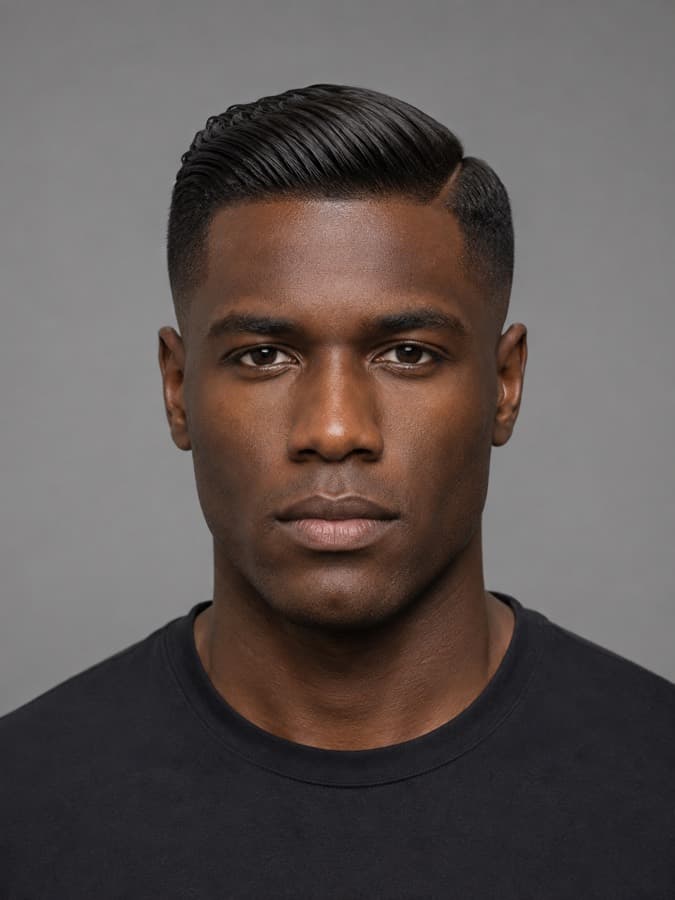
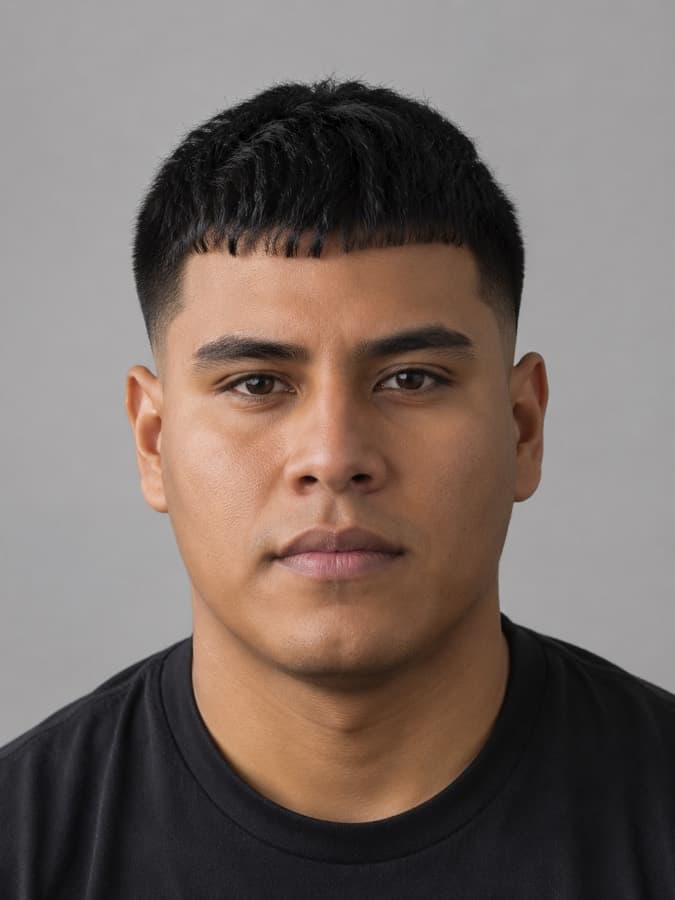
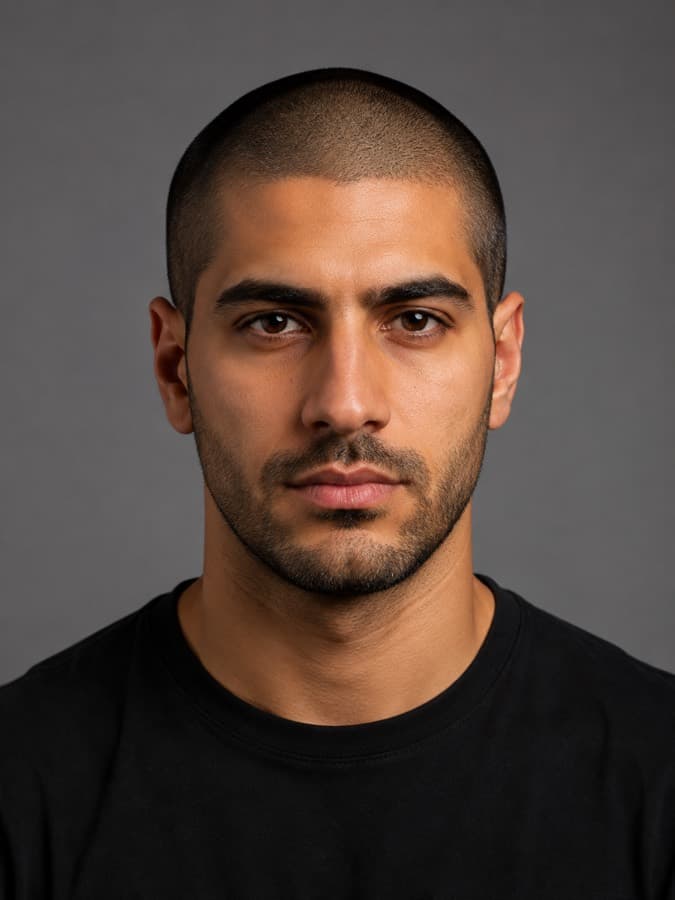
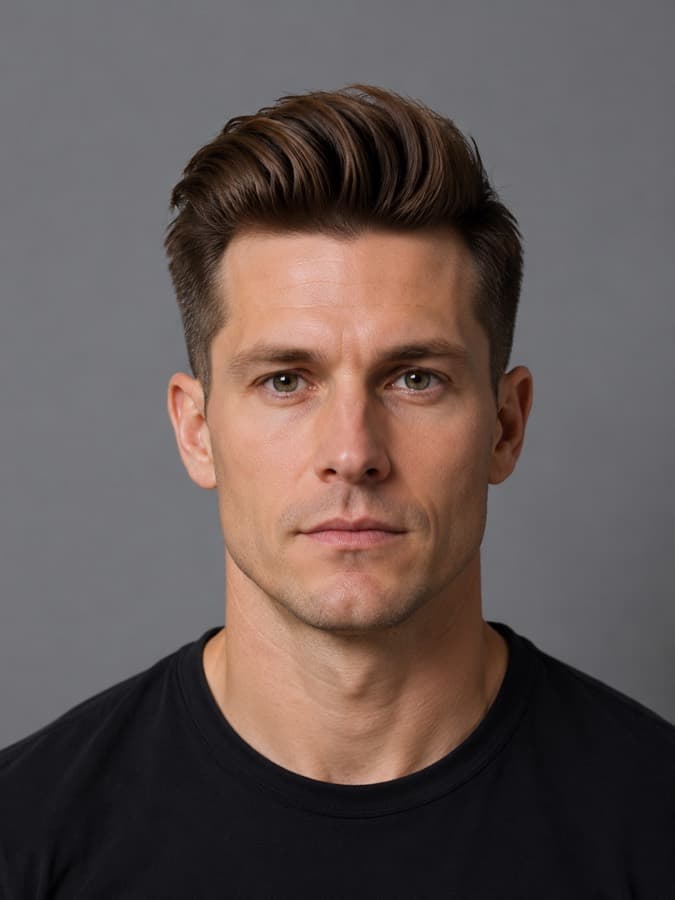
Each one carries the guard numbers, so you can lift the spec straight into the prompt above.
Read next
- The ChatGPT haircut prompt that actually worksThe full prompt, plus the four failures no prompt fixes.
- The two photos to take before any AI haircut try-onA shot list, the eight ruiners, and a prompt that grades you.
- Turning an AI haircut render into something your barber can useThe guard number table, and a prompt that writes the spec.